
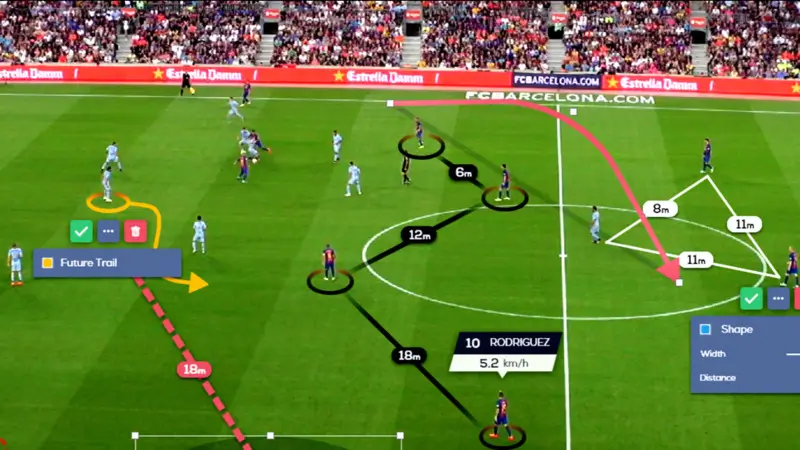
Imagine giving a supercomputer an unlimited database of football matches, player movements, injuries, transfers, and tactical patterns. Could it build the perfect team? Modern football is moving closer to answering that question every season.
Clubs increasingly trust algorithms when scouting players, predicting performance, and identifying tactical weaknesses. Even top betting platforms like the Indian RajBet app use vast amounts of statistical data to help users understand matches and markets.
Yet football remains stubbornly human. Numbers can explain many things, but they cannot fully explain why a team suddenly believes, collapses, or creates history.
The popular image of a scout standing in the rain with a notebook is no longer the whole story. Today, football clubs process millions of data points before signing a player.
Advanced models evaluate pressing intensity, passing networks, expected goals (xG), defensive actions, ball progression, injury history, and age curves. In some organizations, algorithms narrow a list of thousands of players down to a few realistic targets before human scouts even travel.
A famous example is Brentford FC. Owner Matthew Benham applied analytical methods originally developed in the betting industry and built one of football's most discussed data-driven recruitment systems.
The club consistently identified undervalued players before richer competitors noticed them, helping Brentford rise from the lower divisions to the Premier League.
What Modern Recruitment Algorithms Typically Measure:
Metric | What It Measures | Why Clubs Value It |
Expected Goals (xG) | Probability of a shot becoming a goal based on location, angle, body part, and defensive pressure | Helps identify players creating high-quality chances even when they are temporarily unlucky in front of goal |
Expected Assists (xA) | Probability that a completed pass becomes an assist | Reveals creative players whose teammates may be wasting chances |
Progressive Passes | Passes that significantly move the ball closer to the opponent's goal | Measures a player's ability to break defensive lines and advance attacks |
Pressures & Successful Pressures | Frequency and effectiveness of defensive pressure on opponents | Essential for evaluating players in high-intensity systems such as those used by Jürgen Klopp or Pep Guardiola |
Ball Recoveries | Number of loose balls regained for the team | Highlights midfielders and defenders who help restart attacks after possession changes |
Progressive Carries | Distance a player advances the ball through dribbling | Identifies players capable of moving teams up the pitch without relying on passing combinations |
Possession Value (PV) Added | Estimated increase in scoring probability after a player's action | Measures overall contribution beyond traditional goals and assists statistics |
Injury Availability Percentage | Percentage of matches a player is fit and available for selection | Helps clubs avoid investing heavily in players with recurring fitness concerns |
Age Curve Projection | Predictive model estimating future performance based on historical player development patterns | Assists clubs in determining whether a player is approaching their peak, maintaining it, or declining |
Passing Under Pressure | Success rate and decision quality when closely challenged by opponents | Indicates composure, technical ability, and suitability for possession-based football |